


Blog
Featured


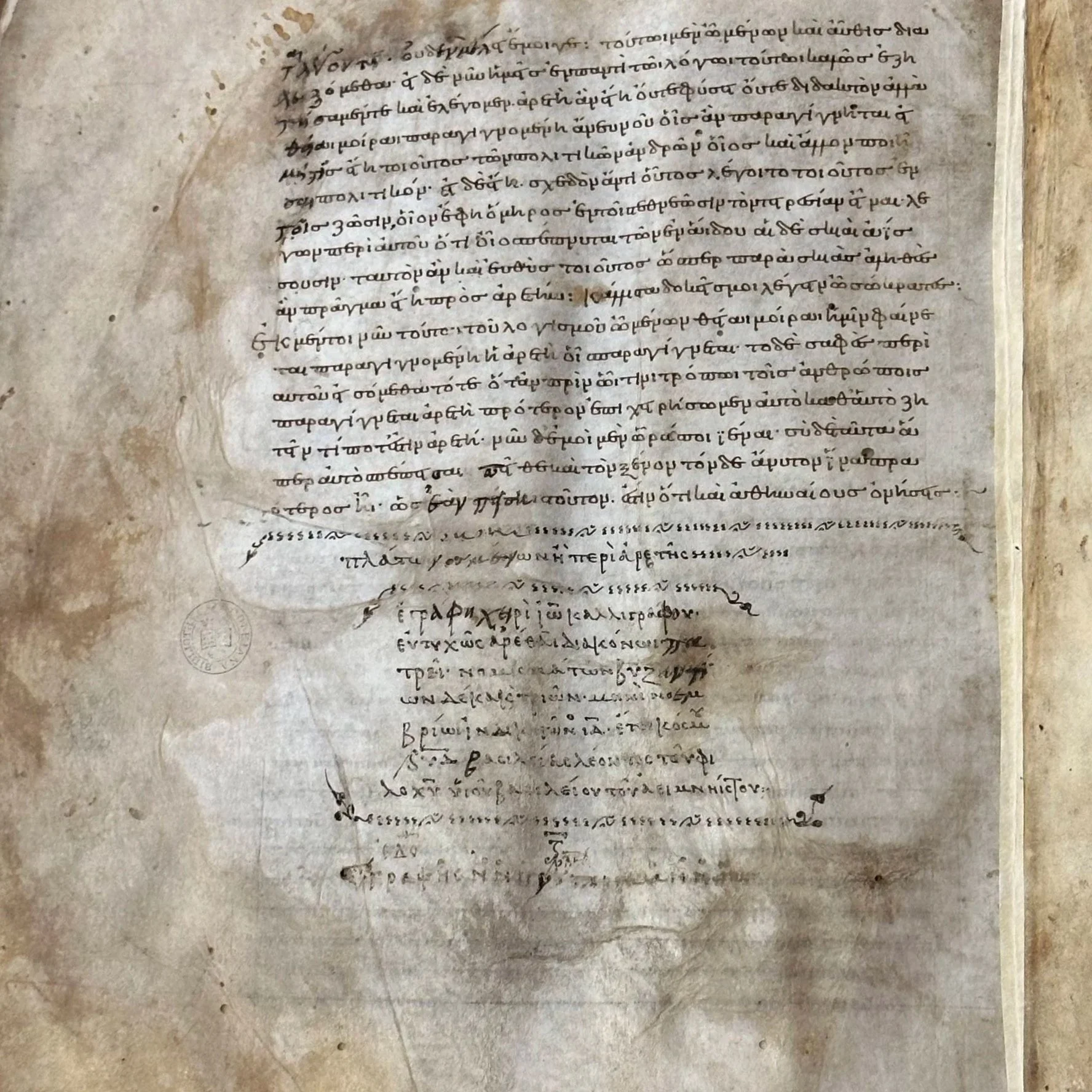


My article “Clement of Alexandria and the Limits of Literary Production” will soon be published in Vigiliae Christianae.
I wrote this article for my philosophy students, but it’s made a helpful difference on their textual engagement.
Is there a method to the madness, or is all of historical theology an exercise in copy-and-pasting public domain translations of earlier sources to fit an agenda?
Words have different meanings or different senses when used in different contexts, and this means that reaching an agreeable consensus about how to talk about Scripture, God, and the gospel in the ancient church added up a tall task.
Read more about a new thematic open session for the 2025 NAPS Annual Meeting on the theme “Scripture and the Arts in Clement of Alexandria.”
A few thoughts on 2024’s Lincoln College Summer School in Greek Palaeography and the Oxford Patistics conference
Announcing the session “Early Christian Creativity and Cultural Production” for the 2024 NAPS Annual Meeting!
I thought it would be fun to do a write-up of my five favorite books that I have read since I began doctoral work at Aberdeen in 2021.
Irenaeus cites John’s account in order to demonstrate the divine identity of Jesus Christ, associating him with the God of Israel who creates and resurrects.
What if I told you some sixty years before the Council of Nicaea would codify homoousios over against the Arians, a significant group of bishops condemned the use of “ousia language” to describe God—including homoousios?
We uphold the divine and the human natures of Christ when we attribute some texts to the Son in his divine nature, while attributing other texts to the Son in his human nature for the sake of accomplishing salvation.
From meadow to memory: how the bee becomes a model for learning in Isocrates and Gregory of Nyssa.